Author: Jill Alexander

  • How Off-Market Listings Actually Work in Scottsdale

    How Off-Market Listings Actually Work in Scottsdale

    Off-market listings in Scottsdale come through three real channels: office exclusives that a seller asks their broker to keep off full MLS distribution, ARMLS’s Coming Soon status, which holds a listing in a pre-marketing window for up to 30 days, and early conversations inside private agent networks like Top Agent Network, where members compare buyer needs and seller intentions before a property is actually marketed anywhere. None of these paths mean a home stays secret once it is being shown or advertised. NAR’s Clear Cooperation Policy requires any listing that is actually publicly marketed, including through a private network that spans multiple brokerages, to reach the MLS within one business day. What these channels really buy a seller is a head start: informal knowledge shared before a property is ready to show, not a permanent way around the MLS. If you want a real shot at an off-market deal, you need an agent who works all three channels and knows exactly where the line sits between advance knowledge and public marketing.
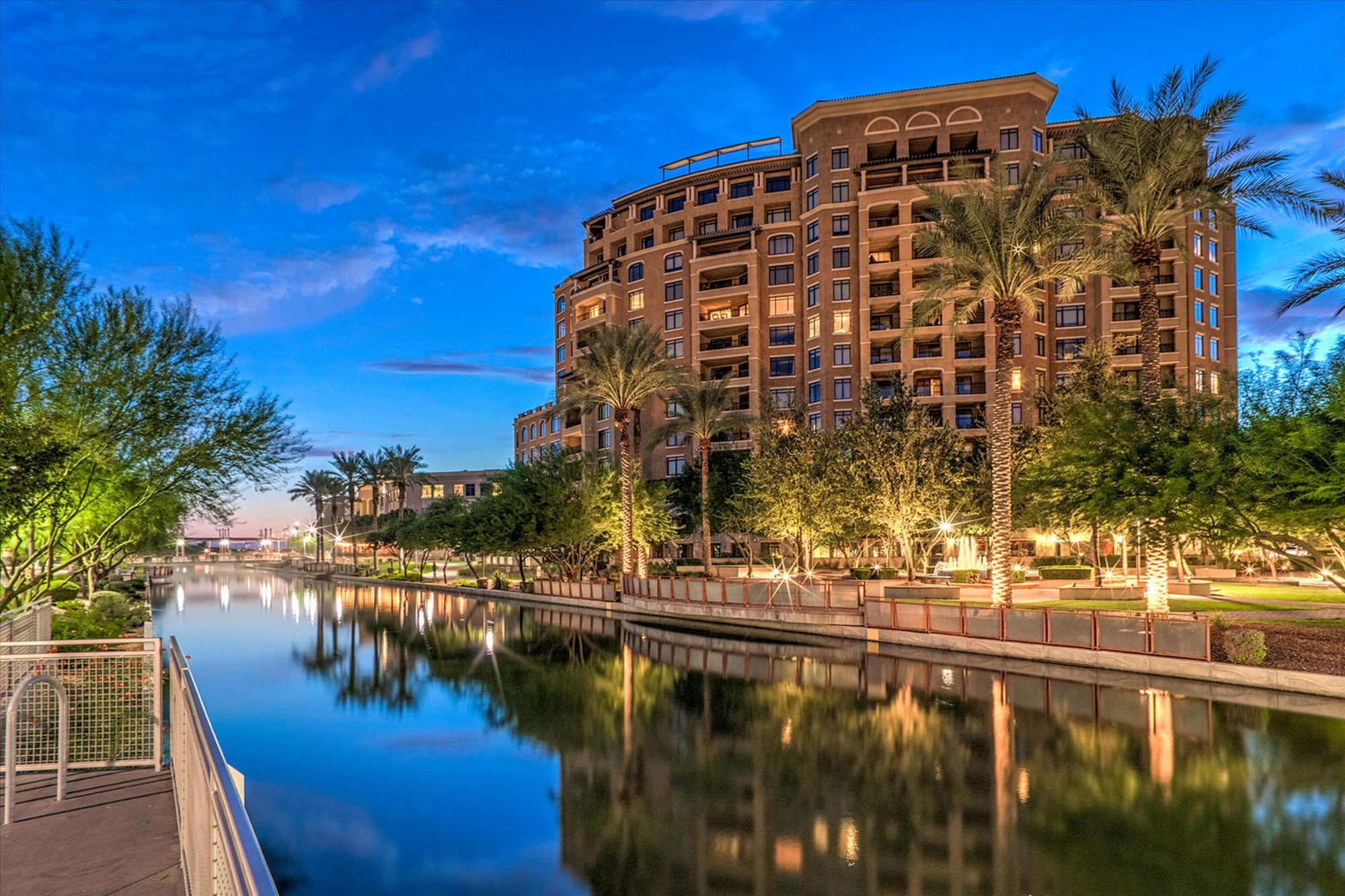
    Off-market listings Scottsdale: Scottsdale Waterfront condo tower at twilight

    I get some version of “can you get me something off-market” from almost every buyer who has read a headline about pocket listings. Most of them are picturing something more mysterious than what actually happens. The honest version is less exciting and more useful: it is about relationships, timing, and which rules a particular listing operates under. This post walks through those rules, where they come from, and what a buyer or seller should actually expect once they understand them.

    What the Research Shows

    • National Association of Realtors, updated July 2026: the Clear Cooperation Policy requires a listing broker to submit a property to the MLS within one business day of the start of public marketing. NAR’s July 2026 guidance also clarified that the choice to go office-exclusive “belongs entirely to the seller,” and must rest on the seller’s own reasons, such as health, safety, or privacy, rather than the broker’s preference.
    • ARMLS, 2026: Arizona’s regional MLS allows listings to sit in Coming Soon status for up to 30 days before Clear Cooperation applies, and listings in that status are not required to include photos yet. Violations of the one-business-day submission rule can accrue fines on a per-day, per-property basis.
    • Redfin analysis, 2021 (most recent published figure on this specific metric): pocket listings rose to roughly 4% of all home sales nationally, up from about 2.4% before Clear Cooperation took effect, meaning the policy meant to push listings toward full MLS exposure also pushed some sellers toward staying off it entirely.
    • Top Agent Network, 2026: membership is limited to agents who rank in the top 10% of production in their local market, and the platform exists so those agents can compare buyer needs and seller intentions with each other before a property is actually marketed anywhere.
    • ARMLS, 2026: a private listing network is treated the same as any other public marketing once it includes brokers or licensees from outside the listing brokerage and a specific property is actually shared or shown through it. That means a multi-brokerage network like Top Agent Network still has to route an active listing to the MLS within one business day the moment a conversation turns into real marketing of a specific home.
    • National Association of Realtors, 2025 Profile of Home Buyers and Sellers: equity-rich, all-cash buyers reached an all-time high share of the market in the survey year, while first-time buyers fell to a record low of 21%. Cash buyers face fewer financing contingencies, which is part of why they show up disproportionately often in office-exclusive and Coming Soon transactions.

    What Clear Cooperation Actually Requires

    The Clear Cooperation Policy is a National Association of Realtors rule, not an Arizona-specific one, and it is the reason “off-market” does not mean what it used to. Once a listing broker starts public marketing, meaning a yard sign, a flyer, a social post, or an email blast to a wide list, the one-business-day clock starts. After that, the listing has to go into the MLS for other agents to see, whether the seller likes it or not.

    That single rule is why office exclusives exist as their own category. A seller who genuinely does not want public marketing at all can ask their broker to keep the listing exclusive to that brokerage, filed with the MLS but not disseminated to other participants, with the seller signing a certification saying so. It is a real option, but it is a narrower one than most buyers assume, since it usually means fewer eyes on the property, not zero marketing behind the scenes.

    Here is the part most agents gloss over when they talk about private networks. ARMLS is explicit that a listing network counts as public marketing the moment it includes brokers or licensees from outside the listing brokerage and an actual property gets shared or shown through it. A group of top-producing agents comparing notes about buyer needs and seller intentions is not marketing yet. The instant that conversation turns into showing or advertising one specific home across those brokerages, the one-business-day clock starts exactly like it would for a yard sign. That distinction is why I am careful never to describe any network, including Top Agent Network, as a way to keep an active listing off the MLS indefinitely. It is not, and treating it that way would put a client’s listing broker at risk of a fine.

    The Three Real Paths to an Off-Market Deal in Scottsdale

    Three mechanisms cover almost every off-market transaction I see in North Scottsdale and Paradise Valley, and they are not interchangeable.

    PathWhat it actually meansTime limitWho sees it
    Office exclusiveFiled with ARMLS but not disseminated; seller signs a certificationNo fixed limit, seller’s choiceOnly the listing brokerage’s own agents and buyers
    Coming Soon statusPre-marketing window before full MLS disseminationUp to 30 days under ARMLS rulesMLS participants, with showings often delayed or restricted
    Private agent network (Top Agent Network)Agents compare buyer needs and seller intentions before a specific property is actually marketed; once a home is shown or advertised across brokerages, Clear Cooperation appliesEnds the moment real marketing starts, not a lasting statusOnly network members and the buyers they represent, until marketing begins

    Coming Soon status is the one most buyers have actually heard of without knowing its name. It lets a seller test a price, prep a home, or avoid the appearance of sitting on the market before the full public push begins. Since ARMLS does not require photos during that window, some of these listings are genuinely bare-bones, just an address, a price, and a promise that showings start on a certain date.

    Private networks work differently and depend entirely on relationships rather than any MLS rule bypass. Being a Top Agent Network member means I hear about buyer needs and seller intentions from other agents who rank in the same production tier, before either side is ready to show or advertise anything. That is not a guarantee that any specific home will come through that channel, and it is not a way to keep an active listing off the MLS once it is actually being shown. It is a wider net of advance knowledge than an agent outside the network has access to, and in a market like Silverleaf, where inventory is genuinely limited, that head start matters more than it does in a higher-volume neighborhood.

    Why Sellers Choose to Go Off-Market

    Privacy tops the list, and it is not vague privacy. A seller going through a divorce, managing a health situation, or simply not wanting neighbors to know a $4 million home is for sale has real, specific reasons to avoid a yard sign. Some sellers want to test a number quietly before committing to a public listing price, since a public price cut leaves a visible trail that can spook later buyers even after the home eventually sells for a fair number.

    Then there is timing. A seller who has not found their next home yet sometimes wants the flexibility to negotiate a longer close, or no close date commitment at all, without a countdown clock showing up on every buyer’s app. None of these reasons make a property harder to buy well. They just mean the seller is optimizing for something other than maximum exposure, and a buyer working with the right agent can still get in front of it, whether that search is centered on North Scottsdale or Paradise Valley.

    What Buyers Should Actually Expect

    Here is where I have to be direct instead of encouraging. No agent, including me, can promise access to a specific off-market home, and any agent who tells you otherwise is selling you a feeling, not a service. What I can promise is that I work all three channels every week: office exclusives inside my own brokerage relationships, Coming Soon listings the moment ARMLS shows them, and Top Agent Network conversations with other top-producing agents across the Valley.

    Buyers who do best in this space are usually the ones with financing already sorted, since a cash-ready or fully underwritten buyer moves fast enough to actually close an off-market deal before a seller decides to just list publicly instead. That connects directly to the NAR data above. Equity-rich, all-cash buyers are a bigger share of the market than they used to be, and they are disproportionately the ones who end up on the other side of an office-exclusive or Coming Soon transaction, simply because they can move without a financing contingency slowing things down.

    The one mistake I would steer every buyer away from is treating “off-market” as a marketing term that means better or more exclusive. Sometimes it means the seller has a real reason for privacy. Sometimes it means the house has a problem the seller would rather not answer questions about in a public listing description. An agent who actually knows the difference is worth more here than in almost any other part of a transaction.

    This is also why I never treat “off-market” as a substitute for the basic decision of where to search in the first place. The neighborhoods overview still matters even for a buyer chasing private inventory, since knowing which pocket you actually want narrows who to call and which network conversations are worth having. If you are still working out whether North Scottsdale or Paradise Valley fits your search better, or how Silverleaf compares to DC Ranch inside that decision, settle that first. It makes every conversation about off-market inventory after it more useful.

    Frequently Asked Questions

    How do I find off-market homes in Scottsdale?

    Work with an agent who is active in all three channels: a network like Top Agent Network for early buyer and seller conversations, direct brokerage relationships that generate office exclusives, and daily ARMLS monitoring for Coming Soon listings. None of these are a permanent way around the MLS. Once a specific home is actually shown or advertised, Clear Cooperation requires it to reach the MLS within a business day, so timing and relationships matter more than any public search tool.

    What is an office exclusive listing in Arizona?

    It is a listing a seller asks their broker to keep off full MLS dissemination, filed with ARMLS but not shared with other participants, backed by a signed seller certification under NAR’s Clear Cooperation Policy. It usually means fewer buyers see the home, in exchange for the privacy or control the seller wants. It is the seller’s choice to make, not the broker’s preference.

    How long can a Scottsdale listing stay in Coming Soon status?

    Under ARMLS rules, a listing can sit in Coming Soon status for up to 30 days before Clear Cooperation requires full MLS dissemination, and photos are not required while it holds that status. After 30 days, or once public marketing begins, whichever comes first, the one-business-day submission clock applies like any other listing.

    Can a real estate agent guarantee me access to off-market listings?

    No, and any agent who says otherwise is overselling. What an agent can offer is active participation in the channels that actually produce off-market deals: private agent networks, direct brokerage relationships, and daily attention to Coming Soon listings the moment they appear. That effort widens a buyer’s odds. It does not guarantee a specific outcome on a specific home.

    Why would a seller want to keep a listing off the MLS?

    Privacy is the most common reason, whether that is a health situation, a divorce, or simply not wanting neighbors to know a home is for sale before it is confirmed. Some sellers also want to test a price quietly before committing to a public number, since a visible price cut can affect how buyers perceive a home later even after it sells fairly. Timing flexibility, like avoiding a public days-on-market count while waiting to find a next home, is another common reason.

    Is Top Agent Network the same as the MLS?

    No. The MLS is a regulated database every participating brokerage can access under Clear Cooperation rules. Top Agent Network is a private membership platform limited to agents in the top 10% of local production, used to compare buyer needs and seller intentions before a property is actually marketed. Once a specific listing is shown or advertised across multiple brokerages through any channel, including a network like this one, NAR’s Clear Cooperation Policy requires it to reach the MLS within one business day.

    Ready to Talk About What Fits Your Situation?

    Whether you are trying to sell quietly or find something before it goes public, the honest answer starts with which channel actually fits your situation. Call or text Jill Alexander at 310-773-6163 and she will walk through what is realistic for your timeline and your privacy needs, not just what sounds good.

    Jill Alexander is a REALTOR® with BVO Luxury Group at Keller Williams Realty Sonoran Living, serving North Scottsdale and Paradise Valley. Each Keller Williams Realty office is independently owned and operated.
  • North Scottsdale or Paradise Valley: How to Actually Decide

    North Scottsdale or Paradise Valley: How to Actually Decide

    North Scottsdale and Paradise Valley sit less than fifteen minutes apart. People ask me to compare them like they’re two flavors of the same thing, but they aren’t. North Scottsdale covers communities like DC Ranch, Silverleaf, Troon, and Grayhawk. It gives you a genuine range of price points and a golf-community feel built around HOAs and shared amenities. Paradise Valley has almost none of that structure. It’s zoned for one-acre-minimum lots. It runs a dark-sky ordinance that limits exterior lighting after dark, and its median home price runs several times higher than North Scottsdale’s broader market. If daily walkability and a wider budget range matter most to you, start in North Scottsdale. If total privacy on a large custom lot matters more than convenience or price, Paradise Valley is where you belong.

    I work both markets every week. The happiest buyers pick based on how they actually want to live, not on which name sounds more prestigious. This post walks through the real numbers and the zoning differences most agents gloss over. Then it gets into the lifestyle trade-offs that decide this more often than price does.

    What the Research Shows

    • Redfin, 2026: Paradise Valley’s average home sale price reached roughly $4.67 million in mid-2026, up close to 20% year over year, while North Scottsdale’s DC Ranch carried a median closer to $2.2 million over the same period. That gap alone tells you these are two different buyer pools.
    • Zillow, 2026: Silverleaf, the guard-gated village inside DC Ranch, posted a trailing twelve-month median near $5.4 million, close enough to Paradise Valley’s pricing to blur the line between “North Scottsdale” and “Paradise Valley” once you’re shopping above $5 million.
    • National Association of Realtors, 2026: existing-home sales nationally are projected to rise 14% in 2026, and Arizona ranks among the top five states for home-buying activity per capita, roughly 12.9 purchases per 1,000 residents. Demand into this market isn’t slowing down.
    • Institute for Luxury Home Marketing, 2026: luxury home sales rose 2.9% nationally in 2026, nearly double the 1.7% pace of the broader housing market, and the report specifically calls out “landmaxxing,” meaning affluent buyers purchasing larger lots or adjoining parcels purely for privacy. That trend explains a lot of what drives buyers toward Paradise Valley specifically.
    • Town of Paradise Valley Zoning Ordinance, adopted 2021: most of the town is zoned R-43, meaning a minimum lot size of 43,560 square feet, one full acre. There is no equivalent zoning floor anywhere in North Scottsdale’s master-planned communities, where lots commonly start well under half an acre.

    What “North Scottsdale” Actually Covers

    North Scottsdale isn’t one neighborhood. It’s a corridor that includes DC Ranch, Silverleaf, Troon, Grayhawk, Sonoran Hills, Windgate Ranch, and the Pinnacle Peak corridor. Each one has its own price band, HOA structure, and personality. DC Ranch has Market Street inside the community, so groceries, dinner, and coffee don’t require leaving the neighborhood. Grayhawk and Troon lean heavily into golf, with course frontage driving a meaningful chunk of the premium on certain lots. Because these communities are master-planned, you’re buying into shared amenities and a homeowners association. That means monthly dues, but it also means landscaping, gates, and common areas someone else maintains.

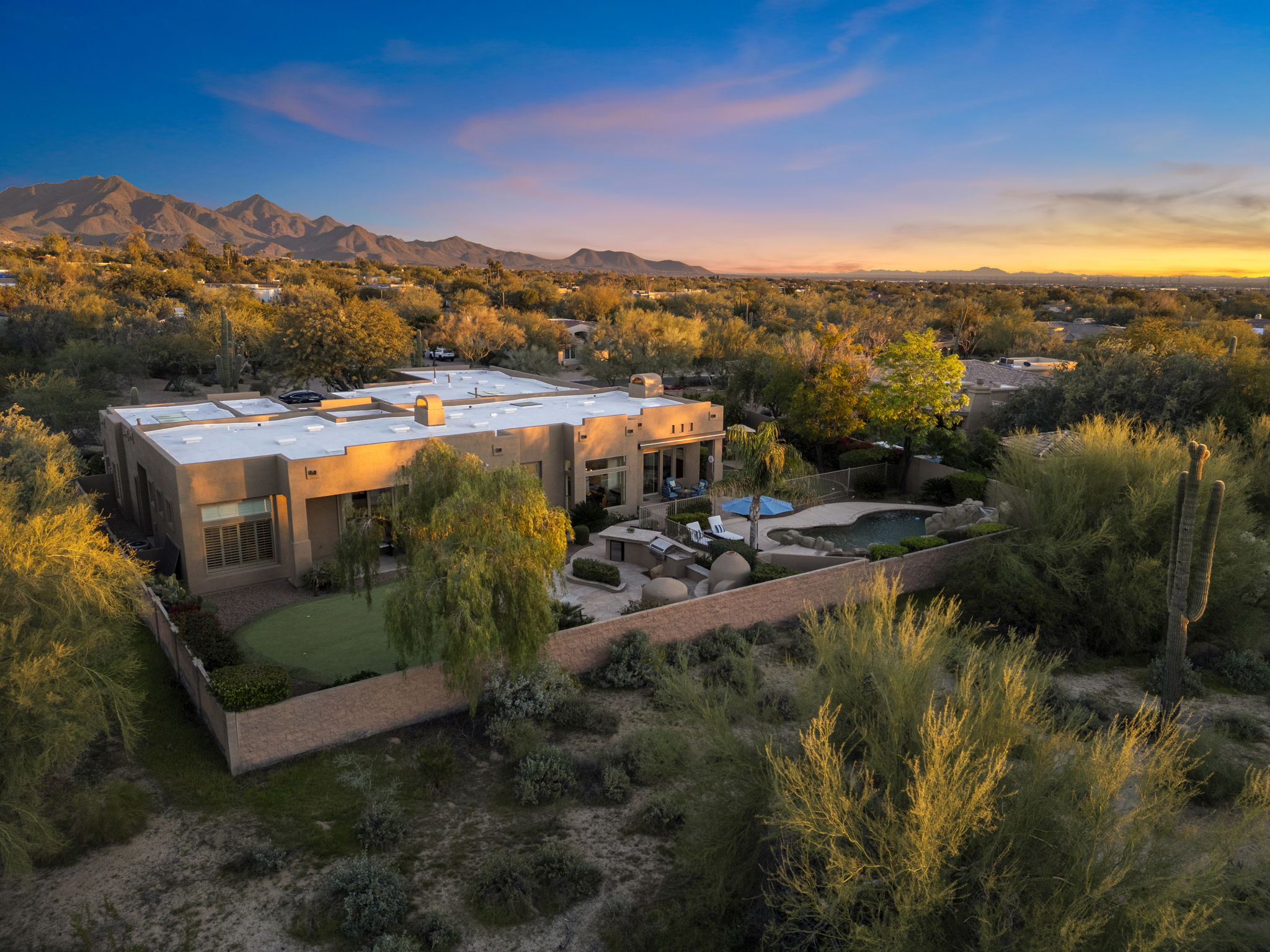
    North Scottsdale golf community aerial view at twilight

    That structure is a feature for a lot of buyers. It especially suits anyone relocating from out of state who wants a turnkey lifestyle without managing every detail themselves. It’s a drawback, though, for buyers who want to build something entirely custom without an architectural review committee weighing in first.

    What Paradise Valley Actually Covers

    Paradise Valley is a separate incorporated town, not a Scottsdale neighborhood, and that distinction matters more than most buyers realize. Neighborhoods like Camelback Country Club Estates, Doubletree Estates, and Cheney Estates sit in the northeast quadrant near the Cherokee Elementary School corridor. They share a common thread: large lots, mature landscaping, and almost no master-planned HOA structure layered on top. The town’s dark-sky ordinance and one-acre zoning minimum aren’t marketing language. They’re the actual law, and they’re why Paradise Valley still feels quiet and dark at night in a way that surprises people used to Scottsdale’s brighter streets.

    Paradise Valley is also home to resort neighbors like Mountain Shadows and Sanctuary, tucked against Mummy Mountain and Camelback Mountain. That proximity is part of why the mountain-view lots command such a premium. You are not buying a house here so much as buying distance from your neighbors, and that distance is priced accordingly.

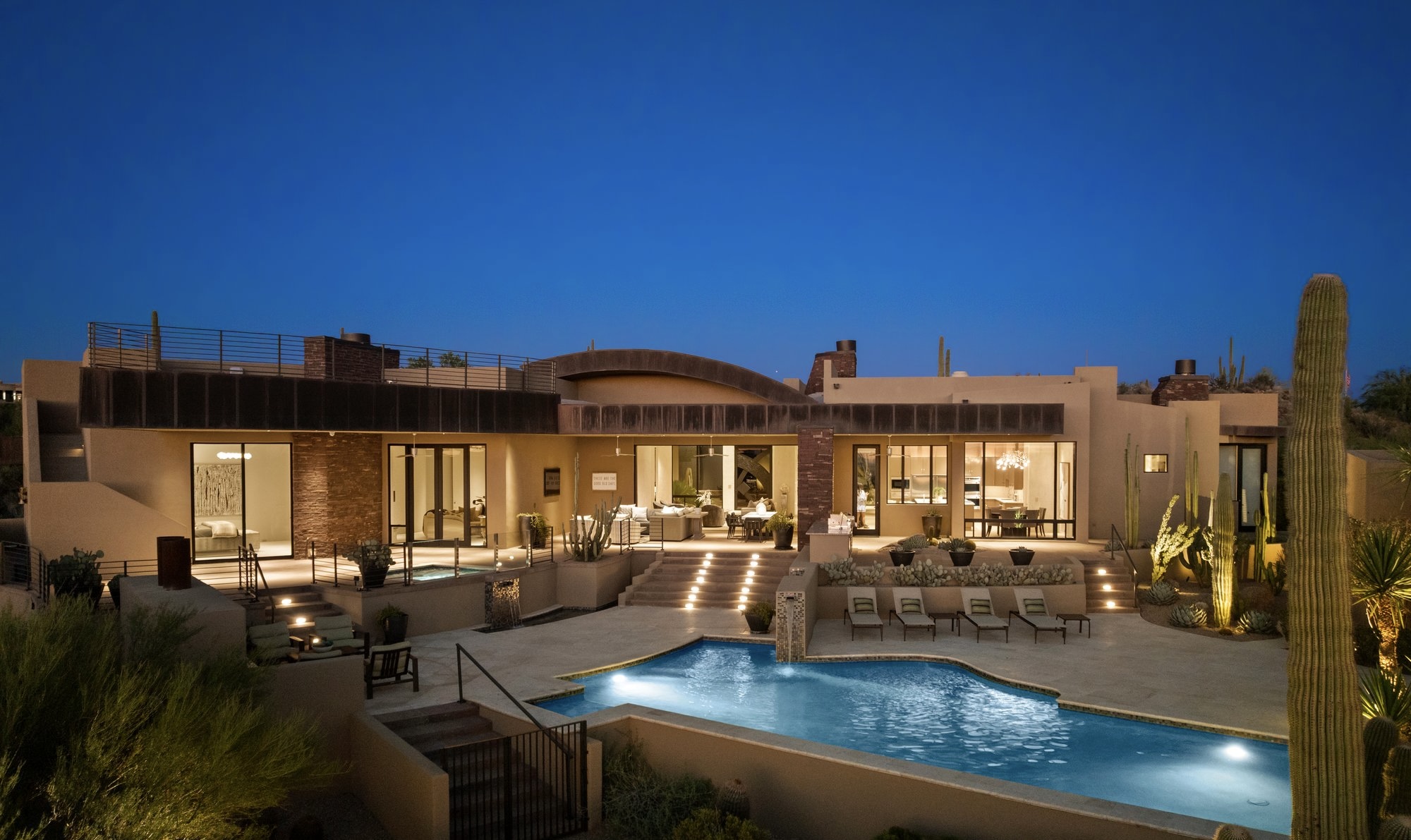
    North Scottsdale vs Paradise Valley: Paradise Valley estate near Camelback Mountain

    Price and Lot Size, Side by Side

    FactorNorth Scottsdale (DC Ranch, Silverleaf, Troon, Grayhawk)Paradise Valley
    Typical price rangeRoughly $725,000 to $37 million, with most activity between $1M and $6MRoughly $3M to $10M+, with a median well above $4.5M
    Typical lot size0.85 to 1.5+ acres in most DC Ranch villages; smaller in some sections1 acre minimum under R-43 zoning, commonly 1 to 3+ acres
    HOA / governanceMaster-planned HOAs, typically $300 to $700+ a month combinedMostly no HOA; governed directly by Town of Paradise Valley zoning code
    Exterior lighting rulesStandard municipal code, community-level design guidelines varyDark-sky ordinance restricts exterior lighting town-wide
    Distance to Old Town Scottsdale15 to 25 minutes depending on community10 to 15 minutes for most neighborhoods
    Golf course accessExtensive; several communities built directly around coursesLimited; primarily through resort or country club memberships
    New construction / custom buildsGoverned by community architectural review committeesGoverned by Town of Paradise Valley building and zoning review
    Best fit forBuyers who want amenities, walkability, and a broader price rangeBuyers who want maximum privacy and are not budget-constrained

    The Lifestyle Trade-Off Nobody Explains Clearly

    Here’s the part most listings won’t tell you. North Scottsdale sells convenience. You can walk to Market Street from most of DC Ranch and tee off at a course inside your own community. It still feels like an actual town, not just an address. Paradise Valley sells the opposite. You are choosing distance and quiet, on a lot large enough that your closest neighbor might sit a few hundred feet away rather than across a shared property line.

    Neither one is objectively better, but they are genuinely different products, and treating them as interchangeable “luxury Scottsdale” wastes a buyer’s weekend. I’ve had clients tour a $4 million home in Paradise Valley expecting a golf community and leave confused about why there wasn’t a clubhouse. I’ve had other clients look at a $4 million home in Silverleaf expecting total isolation and forget they’d hear their neighbor’s pool pump.

    Which One Actually Fits You

    Here’s my honest read, after working both markets for years. Say you want walkable amenities, a broader range of price points, and you don’t mind an HOA managing shared spaces. North Scottsdale is the better fit, especially if this is a primary residence for a family. Say total privacy is the priority and price genuinely isn’t the constraint. Paradise Valley is difficult to beat. No amount of amenities in a master-planned community replaces the quiet of a one-acre dark-sky lot.

    The one mistake I’d steer almost every buyer away from is picking based on the name alone. Paradise Valley carries more cachet in casual conversation. But plenty of Silverleaf estates outprice most of Paradise Valley’s inventory, and plenty of Paradise Valley homes sit on streets with more traffic noise than a gated DC Ranch village. Drive both at 6 p.m. on a weekday before you decide anything. The way a street feels at that hour tells you more than any listing photo will.

    Once you’ve settled which side of that decision fits you, the next question buyers usually ask is how to actually find something before it hits the public listing sites. How off-market listings actually work in Scottsdale walks through the real channels, office exclusives, Coming Soon status, and private agent networks, and what each one can and can’t do for you.

    The neighborhoods overview breaks down lot size, HOA structure, and price range for every North Scottsdale and Paradise Valley pocket I actively work. The North Scottsdale market page and Paradise Valley market page go deeper on each one individually. If you’ve already narrowed to North Scottsdale specifically, the Silverleaf vs. DC Ranch comparison covers the next layer down.

    Frequently Asked Questions

    Is Paradise Valley more expensive than Scottsdale?

    Yes, substantially. Paradise Valley’s average home price ran near $4.67 million in 2026, compared to a median closer to $2.2 million in a North Scottsdale community like DC Ranch, according to Redfin and Zillow data. The gap narrows at the top end, since ultra-luxury villages like Silverleaf can post medians above $5 million that overlap directly with Paradise Valley pricing.

    What is the minimum lot size in Paradise Valley?

    Most of Paradise Valley is zoned R-43 under the town’s 2021 zoning ordinance, which sets a one-acre minimum lot size, 43,560 square feet. Some older parcels carry a smaller R-35 minimum at 35,000 square feet, but those are less common. North Scottsdale communities have no equivalent town-wide minimum, since lot size there is set by each individual master-planned community.

    Which is better for families, North Scottsdale or Paradise Valley?

    North Scottsdale generally fits families better because of the walkability, shared amenities, and broader range of price points inside communities like DC Ranch and Grayhawk. Paradise Valley works well for families who prioritize privacy and space over walkable amenities and don’t mind driving to reach a town center, since the town itself has very little commercial development.

    Can you build a custom home in Paradise Valley?

    Yes, and it’s one of the main reasons buyers choose the town. New construction goes through the Town of Paradise Valley’s own building and zoning review rather than a homeowners association’s architectural committee, which gives buyers more latitude on design as long as they meet the town’s height, setback, and dark-sky lighting requirements.

    What’s the real difference between DC Ranch and Paradise Valley?

    DC Ranch is a master-planned North Scottsdale community with its own town center, golf access, and a homeowners association managing shared amenities. Paradise Valley is a separate incorporated town with almost no HOA structure, one-acre zoning minimums, and a dark-sky ordinance, built around large private lots rather than shared community amenities. They serve genuinely different buyer priorities even though they sit close together geographically.

    Do Paradise Valley homes have HOAs?

    Most do not. Unlike North Scottsdale’s master-planned communities, Paradise Valley is governed directly by the town’s own zoning and building code rather than a layered HOA structure, though a small number of individual subdivisions do carry their own association. Confirm HOA status on any specific property before assuming either way, since it varies parcel to parcel.

    Ready to See Both in Person?

    The fastest way to actually understand the difference is to tour a North Scottsdale community and a Paradise Valley neighborhood back to back on the same day. Call or text Jill Alexander at 310-773-6163 and she’ll build a tour around what you’re actually optimizing for, whether that’s walkability, privacy, schools, or resale.

    Jill Alexander is a REALTORĀ® with BVO Luxury Group at Keller Williams Realty Sonoran Living, serving North Scottsdale and Paradise Valley. Each Keller Williams Realty office is independently owned and operated.
  • Silverleaf vs. DC Ranch: What Actually Separates Them in 2026

    Silverleaf vs. DC Ranch: What Actually Separates Them in 2026

    Silverleaf is not a neighborhood next to DC Ranch. It is a village inside DC Ranch, and the confusion between the two costs buyers real time on tours they didn’t need to take. DC Ranch is the larger master-planned community, roughly a dozen villages spread across North Scottsdale with a genuine range of price points, lot sizes, and architecture. Silverleaf is the guard-gated, ultra-luxury village inside that plan, built around its own private club and a stricter architectural review than anywhere else in DC Ranch. If someone tells you they’re “looking at DC Ranch or Silverleaf” as though those are two competing options at the same price point, they haven’t seen inside the gates yet.

    Why This Distinction Actually Matters

    Most real estate content treats North Scottsdale as one label. Jill Alexander, REALTOR® with BVO Luxury Group at Keller Williams Realty Sonoran Living, works North Scottsdale and Paradise Valley as two distinct markets, and inside North Scottsdale she treats DC Ranch and Silverleaf as two distinct conversations. That distinction is the whole job. A buyer who wants a walkable village with Market Street a golf cart ride away is going to be frustrated in Silverleaf’s estate-lot quiet. A buyer who wants total privacy behind a guarded gate is going to feel exposed in DC Ranch’s more neighborhood-driven villages. Knowing which one actually fits a buyer’s daily life, rather than their Pinterest board, is what separates a good tour from a wasted weekend.

    DC Ranch, the Larger Picture

    DC Ranch spans multiple villages, each with its own character, HOA structure, and price range. Lot sizes generally run from about 0.85 to 1.5-plus acres depending on the village, with a mix of gated and non-gated sections. Architecture leans Southwestern, Mediterranean, and contemporary, and HOA dues typically run in the $300 to $700 a month range once master and village dues are combined. Market Street sits inside the community, so daily errands, dinner, and coffee don’t require leaving the neighborhood. This is the version of North Scottsdale luxury that still feels like a place people actually live day to day, not just an address.

    Silverleaf, the Village Within the Village

    Silverleaf’s lots run from roughly a third of an acre up to 10-plus acres, entered through three guard-gated points, with its own homeowners association that runs higher than the rest of DC Ranch. The architectural review here is genuinely strict: Southwestern, Mediterranean, and contemporary styles are all represented, but nothing gets built without clearing design standards that are tighter than almost anywhere else in the Valley. The Silverleaf Club anchors the social side of the community, and the privacy that comes with three points of guarded entry is the actual product being sold here, more than any single floor plan.

    The Question Worth Asking Before You Tour Either One

    Don’t ask which community is “better.” Ask which one matches how you actually want to live. If daily walkability, a broader range of price points, and a more neighborhood feel matter to you, DC Ranch outside Silverleaf deserves a serious look. If total privacy, custom architecture at the highest design standard, and a private club at the center of your social life matter more than convenience, Silverleaf is difficult to beat. Jill’s own read, after working both markets from inside North Scottsdale and Paradise Valley: most buyers decide this by driving both at 6 p.m. on a weekday, not by comparing spec sheets. The way a street feels at that hour tells you more than any listing photo will.

    She’s also a member of Top Agent Network, a private network of actively producing agents that shares off-market and coming-soon inventory before it reaches public listing sites, which matters most in a village like Silverleaf where inventory is genuinely limited. For the fuller mechanics behind that, including exactly where the MLS rules draw the line, see how off-market listings actually work in Scottsdale. For a fuller comparison of every North Scottsdale and Paradise Valley pocket she’s actively working, the neighborhoods overview breaks down lot size, gate status, architecture, and HOA dues side by side.

    Frequently Asked Questions

    What is the actual difference between Silverleaf and DC Ranch?

    DC Ranch is the larger master-planned community; Silverleaf is the ultra-luxury, guard-gated village inside it. DC Ranch offers a broader range of lot sizes, price points, and a more walkable, neighborhood-driven feel with Market Street inside the community. Silverleaf offers stricter architectural review, three guard-gated entrances, and its own private club, at a meaningfully higher price point and HOA cost.

    Is Silverleaf part of DC Ranch or a separate community?

    Silverleaf is a village within the broader DC Ranch master plan, not a separate neighborhood next door. It has its own gates, its own HOA, and its own club, but it sits inside DC Ranch’s overall footprint.

    Which one has bigger lots, Silverleaf or DC Ranch?

    Silverleaf’s lots range more widely, from about a third of an acre up to 10-plus acres in its largest estate sections. DC Ranch’s villages generally run from about 0.85 to 1.5-plus acres, varying by village.

    Are HOA dues higher in Silverleaf than the rest of DC Ranch?

    Yes. Silverleaf runs its own HOA that is typically higher than dues in DC Ranch’s other villages, reflecting the guard-gated entry, private club, and stricter design review.

    How do I know which one is right for me?

    It depends on what you’re actually optimizing for day to day: walkability and a broader price range point toward DC Ranch outside Silverleaf, while total privacy and the highest architectural standard point toward Silverleaf. Jill Alexander, REALTOR® with BVO Luxury Group at Keller Williams Realty Sonoran Living, walks North Scottsdale buyers through this exact trade-off before a single showing gets scheduled.

    Can I see homes in Silverleaf before they’re publicly listed?

    Jill is a member of Top Agent Network, a private network of actively producing agents that shares off-market and coming-soon inventory ahead of public listing sites, which is particularly useful in a limited-inventory village like Silverleaf.

    Zooming out from Silverleaf and DC Ranch specifically, the North Scottsdale vs. Paradise Valley comparison covers the bigger decision buyers usually make first: which side of the map actually fits how you want to live.

    Ready to Compare Silverleaf and DC Ranch in Person?

    The fastest way to actually understand the difference is to see both at the same time of day. Call or text Jill Alexander at 310-773-6163 and she’ll walk through which villages fit your priorities, whether that’s privacy, resale, schools, or a golf club membership.

    Jill Alexander is a REALTOR® with BVO Luxury Group at Keller Williams Realty Sonoran Living, serving North Scottsdale and Paradise Valley. Each Keller Williams Realty office is independently owned and operated.